

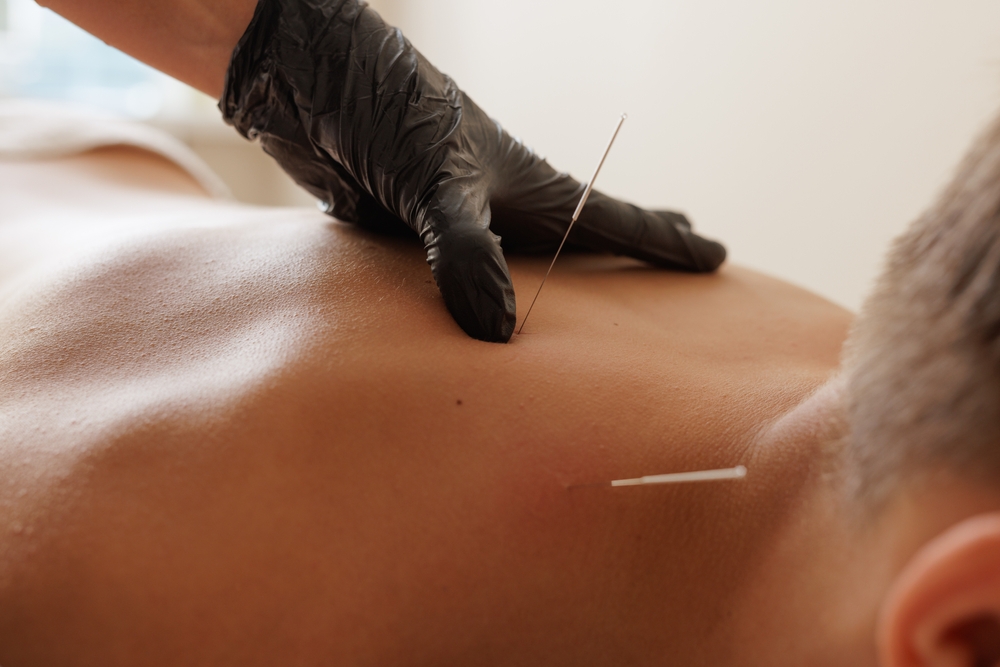
Dry needling is a treatment technique commonly used by physiotherapists to help relieve muscle tension, reduce pain, and improve movement. It involves inserting a very fine, sterile needle into tight muscles or trigger points to encourage the muscle to relax and restore normal function.
If you’ve never had dry needling before, it’s natural to have questions about how it works and what to expect afterward. Here’s what you need to know.
How does dry needling work?
When a muscle becomes tight or irritated, it can enter a cycle of ongoing contraction, reduced blood flow, decreased oxygen supply, and pain. This can lead to stiffness, restricted movement, and persistent discomfort.
Dry needling helps interrupt this cycle by:
- Releasing tight muscle bands and trigger points
- Reducing abnormal nerve-to-muscle activity
- Improving local blood flow and oxygen delivery
- Decreasing pain sensitivity
- Restoring normal muscle function and movement
As the muscle relaxes, many people notice improved flexibility, reduced pain, and easier movement.
What is a twitch response?
During treatment, you may experience a brief involuntary muscle contraction known as a local twitch response. This feels like a quick muscle “jump” and occurs when the needle reaches a sensitive trigger point.
A twitch response is considered a normal reaction and may help:
- Release tight muscle fibres
- Reduce excessive muscle tension
- Reset the muscle to a more relaxed state
- Improve pain and movement
Not everyone experiences a twitch response, and dry needling can still be highly effective even if one does not occur.
Is it normal to feel sore afterwards?
Yes. Mild soreness after dry needling is one of the most common and expected responses to treatment.
You may experience:
- Mild muscle soreness similar to post-exercise soreness
- Tenderness around the treated area
- Temporary stiffness
- A feeling of heaviness or fatigue
- Small bruises or a minor red bump at the needle site
These symptoms usually improve within 24 to 48 hours, although some people may remain sore for up to 72 hours.
The soreness occurs because the treatment stimulates a natural healing response within the muscle. If a twitch response occurs, the muscle may feel similar to how it feels after a workout. Occasionally, a small blood vessel near the skin may be irritated, resulting in a minor bruise or red bump, which typically resolves within a few days.
What are the possible symptoms and side-effects?
You may experience:
- Local muscle soreness or tenderness
- A feeling of heaviness or fatigue in the treated area
- Small local bruises or red bumps
- Temporary exacerbation of symptoms
Less commonly, some people may feel light-headed, nauseous, or faint during or shortly after treatment. These reactions are usually short-lived and resolve quickly.
Aftercare: How can I help my recovery?
Following a few simple guidelines after your appointment can help you recover more comfortably.
We recommend:
- Applying heat for 10–15 minutes if the area feels sore
- Keeping the treated area gently moving throughout the day
- Performing your prescribed exercises and gentle stretches
- Drinking plenty of water
- Avoiding strenuous exercise or heavy lifting until the following day
We generally do not recommend applying ice immediately after treatment, as dry needling works by promoting circulation and the body’s natural healing response.
Are there any side effects?
Dry needling is considered a safe treatment when performed by a trained physiotherapist.
Common temporary side effects include:
- Muscle soreness
- Mild bruising
- Minor bleeding at the needle site
- Temporary increase in symptoms
- Fatigue or drowsiness
Less commonly, some people may feel light-headed, nauseous, or faint during or shortly after treatment. These reactions are usually short-lived and resolve quickly.
When should I contact my physiotherapist?
Please contact your physiotherapist if you experience:
- Pain that continues beyond 72 hours without improvement
- Severe or worsening pain
- Significant swelling, redness, warmth, or unusual skin changes
- Any symptoms that concern you or feel unusual
Dry needling works best as part of a rehabilitation program
While dry needling can provide effective short-term pain relief and reduce muscle tension, lasting improvement is best achieved when combined with an individualised rehabilitation program. Strengthening, mobility exercises, posture advice, and movement retraining all play an important role in addressing the underlying cause of your symptoms—and that’s how we can help.
If you have any questions about dry needling or whether it’s right for you, please don’t hesitate to speak with one of our physiotherapists.
We look forward to helping you move better, feel better, and get back to doing what you love.
